U.S.–China Trade War Under The Second Trump Administration
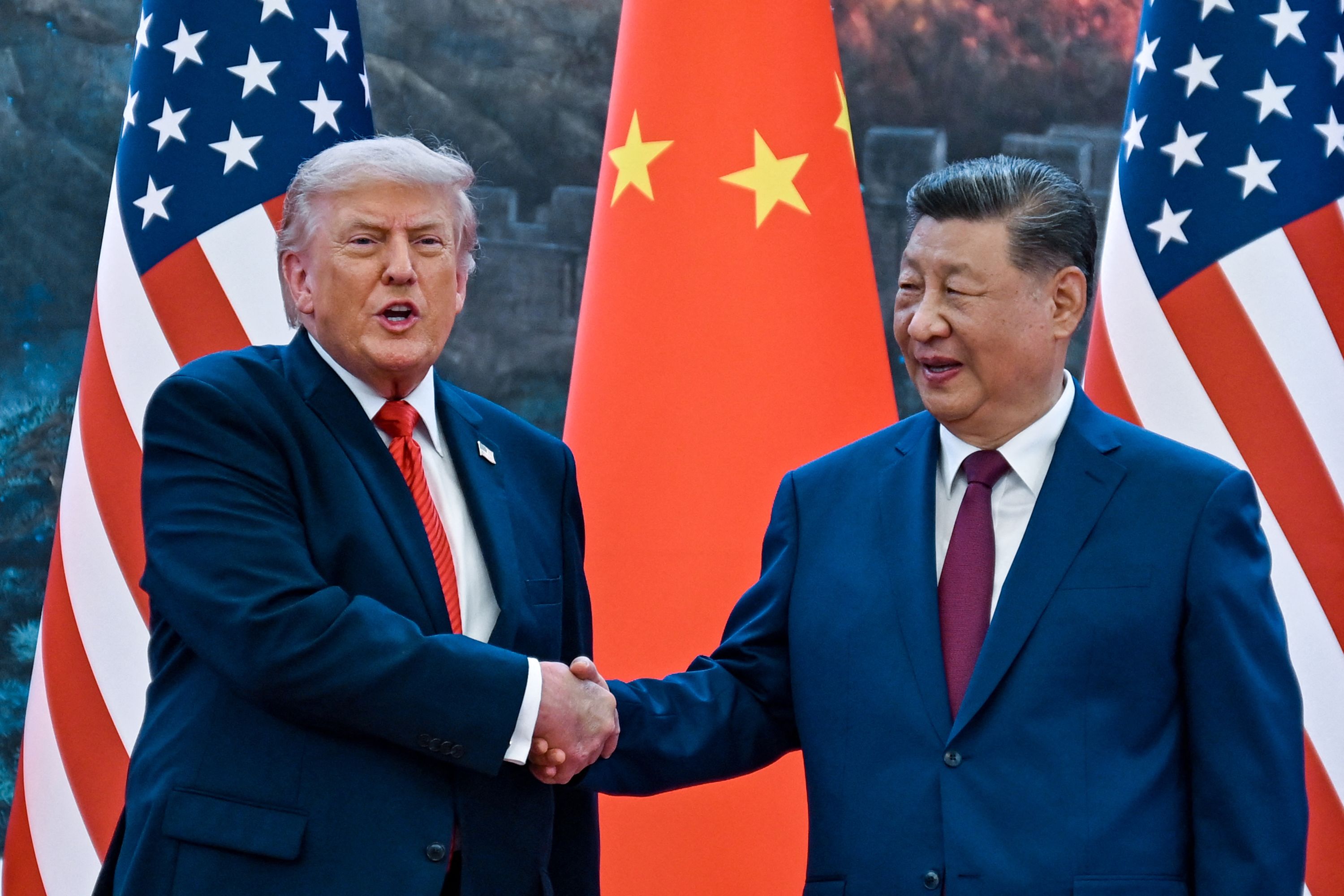
The second term of the Trump administration started with Trump’s threat to take Panama back, which he claims is now controlled by China and imposed 10% tariffs on Chinese imports. Simultaneously, he announced 25% tariffs on Canada and Mexico too. While Canada and Mexico sought to avoid escalation through negotiations and expressed willingness to reach agreements, China responded with 10% retaliatory tariffs on the USA just four days after Trump announced tariffs. In the following months, tariffs imposed by both sides escalated to as high as 120% without signs of either side stepping back. The USA-China escalation is a demonstration of not only an economic dispute but also an effort to show their power and strength on the global stage. Over the decade, international politics has been centered on the relationship between the USA and China, as China is seen as a challenger to the USA’s hegemony. This article examines Trump’s renewed tariff policy used as a leverage to confront China and turn the relationship between the countries into a trade war.
The Post–Cold War Order and the Rise of China as a Systemic Challenger
As the Cold War ended and the USSR collapsed, the international system shifted from a bipolar to a unipolar world with the hegemony of the USA. Having the biggest GDP, the most advanced military and significant soft power, the USA became the only superpower in the absence of a rival to confront. After the Cold War, the USA extended its hegemony across the international system as the sole superpower in the world, using it as a leverage to influence, deter, and coerce and shape the behaviour of other countries.
On the other hand, China entered the post-Cold War era as a very poor country, having very little influence in world politics, due to centuries of economic stagnation and political isolation. After Deng Xiaoping’s dramatic reforms in 1978, China’s market became open to the world, offering attractive low taxes and large labour, and foreign investment in China increased in a short time. By the time, through different projects, such as the Road and Belt Initiative and Made In China 2025 from low cost and low quality products, it centered itself as a technological development, particularly in electric vehicles, chips, phones, and AI, while expanding its influence across South Asia, Africa and South America. China’s economic growth has been rapid and unprecedented. China’s GDP in 2000 was around $1.2 trillion, and in 2025 it reached $19 trillion, increasing 15 times bigger in just 25 years. By comparison, USA GDP grew from about $10 trillion in 2000 to roughly $30 trillion by 2025. During this time, China surpassed Japan and Germany by GDP and now it’s the second biggest economy in the world after the USA. China’s big economy has enabled it to invest a lot in its technology, military and soft power. It has put China competing with the USA in almost every sector, starting from technology, electric cars, AI, and soft power, making the world gradually lead towards a more multipolar world. In this context, the U.S.A.’s concerns about its global position have intensified, as it faces a rising power that openly challenges American hegemony.
From the First Trade War to the Second Trump Administration
During his first administration, President Trump called China an unfair trade partner by pointing to a huge trade deficit between the USA and China. In order to reduce the deficit, the Trump administration imposed 7–25% tariffs on approximately $350 billion worth of Chinese imports. Beijing responded swiftly with retaliatory tariffs on USA exports to China, calling it bullying and unlawful under international trade norms. In 2020, the US and China signed a deal that still didn’t resolve the deficit between them, but still left some tariffs in place even during the Biden administration. The persistence of tariffs despite diplomatic efforts demonstrates that it was a foundation and frame of trade war, which was not the reason for the deficit, but more because of political and strategic reasons.
By 2025, the deficit of USA-China trade reached its highest, with China exporting goods worth approximately $525 billion to the USA, and importing only about $165 billion. When the second term of Trump started, tariffs were once again the center of U.S trade policy, not only toward China, but also to its major trading partners, such as the EU, Canada, Mexico, Japan and South Korea. Trump claims that these countries had been taking advantage of the USA, to reduce the trade deficit between these countries and bring manufacturing power back to the USA, which had gone overseas because of low workforce and low taxes in countries such as India, China and Vietnam. However, Trump’s use of tariffs indicates that they are not only used to solve economic disputes but to shape the actions of other countries and reach their political goals, too, as he did in the case of Brazil, where tariffs were used as threats to pressure the government over domestic political issues.
With regard to China, Trump initially announced a 10% tariff on Chinese goods. Beijing didn’t step back and responded to the USA by imposing 10% tariffs on USA goods too. It followed with a rapid cycle of escalation. The USA again responded with additional 10% tariffs, and China responded with the same. As the tensions continued to rise, on April 2, the USA imposed an additional tariff of 34% which totaled to 54%. China retaliated with the same amount and introduced rare-earth export restrictions. On April 9 2025, Trump raised tariffs on Chinese goods by 145%, prompting China to respond with 125%. An economic dispute grew to a trade war between the two biggest economies, destabilizing the world economy. Both sides sought to show strength, persistence and credibility on the international stage. Trump with his movement wanted not only to pressure China, but also to threaten other countries such as the EU and Canada, who might want to retaliate against US tariffs. China, meanwhile, as a growing superpower with its influence on Africa, South Asia and South America, wanted to signal its credibility and would not yield to external pressure.
The Trump–Xi Meeting at the APEC Summit
As the tariffs stood very high 145% on Chinese goods and 125% on American products imposed by China. The USA has a deficit of $361 billion with China even though the tariffs imposed by China were high too, still Washington was in an advantageous position. Since the US export to China was significantly lower than Chinese exports to the USA, Washington could gain more revenue from the tax on Chinese goods. From a perspective, it positioned the U.S. in a seemingly stronger position within the tariff confrontation.
However, Beijing played its card of rare-earth minerals, which China controls 60% of production in the world market share and 90% in refining. Rare-earth minerals are crucial for building smartphones, electric cars, chips, aircraft, etc. China imposed rare-earth export restrictions on the USA, which softened the USA’s stance on tariffs and brought both Trump and Xi to the negotiation table.
On October 30th, Trump and Xi met at the APEC summit in Korea, resulting in a one-year agreement that signaled a temporary de-escalation of the trade war. According to the agreement, China decreases its tariffs to the USA, suspends the ban on rare-earth minerals, buys more soybeans, and halts the flow of fentanyl. Simultaneously, the USA allows the sale of Nvidia chips and reduces tariffs too.
This one year truce looks more like just a temporary ceasefire than a real solution to the trade war. Trump couldn’t get what he was initially expecting from this meeting as the dynamics of the trade relationship have not changed since the first tariffs were imposed. Trump’s tariffs demonstrated how Beijing has been preparing for such a confrontation, and is even willing to absorb economic costs rather than yield to U.S. pressure. Trade statistics of China demonstrate how China, despite the USA tariffs, has increased its exports. During the 11 months of 2025, China exported goods worth 3.4 trillion while importing only 2.3 trillion. It can be said that it was much more of a win for China as it could diversify its export more towards ASEAN countries, South America and Russia. In the case of the U.S, the Trump administration’s threat of tariffs to the U.S.’s closest allies, such as the EU, Japan, South Korea and Canada, has positioned the USA as an unreliable ally. As a result, actors such as the EU started seeking more ties with China and other alternative markets.
In conclusion, this article demonstrates how the USA-China trade relations escalated to a trade war through the Trump administration’s massive use of tariffs. It depicts how the Trump administration took a confrontational stance on China during his first term, but this approach became more decisive and stricter during the second term. Furthermore, tariffs were not used solely as an economic instrument, but to show their power and strength and to coerce some countries into specific actions. At the same time, China proved it has been ready for this administration and has taken measures in advance for a prolonged economic pressure. China’s countermeasures projected its capacity to endure and adapt to U.S. economic coercion. By this move, China demonstrated itself as a resilient and increasingly reliable global actor capable of confronting U.S. pressure. The trade war thus reflects not only an economic confrontation, but a broader struggle over credibility, leadership, and influence in an international system that is gradually moving away from U.S. unipolar dominance.
Source:
Boston University Global Development Policy Center. (August 21st, 2024). Relative risk and the rate of return: Chinese loans to Africa database (2000–2023).
++https://www.bu.edu/gdp/2024/08/21/relative-risk-and-the-rate-of-return-chinese-loans-to-africa-database-2000-2023/++
China Briefing. (December 10, 2025 ). US–China relations in the Trump 2.0 era: Implications.
++https://www.china-briefing.com/news/us-china-relations-in-the-trump-2-0-implications/++
John L. ( December 12,2025 ). China’s trade surplus and U.S. tariffs: Analysis. CNN:
++https://edition.cnn.com/2025/12/10/business/china-trade-surplus-us-tariffs-analysis-intl-hnk++
Karen M. (August 26, 2025.). U.S.–China Tariff actions since 2018:Overview. CongressGov:
++https://www.congress.gov/crs-product/IF12990++
Nik M. (October 9, 2025). How China wields rare earths as a strategic weapon.DW:
++https://www.dw.com/en/how-china-wields-rare-earths-as-a-strategic-weapon/a-72868760++
Economist Intelligence Unit. (November 19, 2025). Asia-Pacific outlook 2026.
++https://www.eiu.com/n/blogs/apac-2026-outlook/++
Marco M. (March 18, 2025). American hegemony and the emergence of global orders. Foreign Analysis:
++https://foreignanalysis.com/american-hegemony-and-the-emergence-of-global-orders/++
Tae-Yoon K, Shobhan D, Amrita D. and Alessio S.(October 23, 2025). With new export controls on critical minerals, supply concentration risks become reality. International Energy Agency:
++https://www.iea.org/commentaries/with-new-export-controls-on-critical-minerals-supply-concentration-risks-become-reality++
Macrotrends. (n.d.). China GDP — Gross domestic product.
++https://www.macrotrends.net/global-metrics/countries/chn/china/gdp-gross-domestic-product++
Microtrends. (n.d.). United States GDP — Gross domestic product.
++https://www.macrotrends.net/global-metrics/countries/usa/united-states/gdp-gross-domestic-product++
Abdul R. ( December 10, 2025). Despite U.S. tariffs, China’s trade surplus exceeds $1 trillion. Peoples Dispatch:
++https://peoplesdispatch.org/2025/12/10/despite-us-tariffs-chinas-trade-surplus-exceeds-1-trillion-dollars/++
Chad P. (November 10, 2025). U.S.–China trade war tariffs: an up-to date-chart. Peterson Institute for International Economics:
++https://www.piie.com/research/piie-charts/2019/us-china-trade-war-tariffs-date-chart++
Erica Y. and Alex D. ( December 1, 2025 ). Trump Tariffs: Tracking the Economic Impact of the Trump Trade War. Tax Foundation:
++https://taxfoundation.org/research/all/federal/trump-tariffs-trade-war/++
The White House. ( November 1, 2025). Fact sheet: President Donald J. Trump strikes deal on economic and trade relations with China:
++https://www.whitehouse.gov/fact-sheets/2025/11/fact-sheet-president-donald-j-trump-strikes-deal-on-economic-and-trade-relations-with-china/++
Jeffrey A. and Stephan H. (November 5, 2025). The China summit revealed the limits of Trump’s tariff war. Yale Insights:
++https://insights.som.yale.edu/insights/the-china-summit-revealed-the-limits-of-trumps-tariff-war++
Megha B. ( October 21, 2025). U.S.–China now in a very different kind of trade war, experts warn. Aljazeera:
++https://www.aljazeera.com/economy/2025/10/21/us-china-now-in-a-very-different-kind-of-trade-war-experts-warn++
Alex K. (December 9, 2025). How did China’s trade surplus hit $1 trillion?Aljazeera:
++https://www.aljazeera.com/news/2025/12/9/how-did-chinas-trade-surplus-hit-1-trillion++
JAMSHED SAFARALIEV
You may also like
The World Is Not Multipolar (Yet)
China’s rise is reshaping the balance of power, but the United States still holds the advantages needed to remain the system’s dominant pole.
Read Article →Does India’s Rafale Deal Reshape The Russia-India Partnership and Regional Balance?
India’s Rafale deal with France reflects a strategy of diversifying defense partnerships
Read Article →Fransa Protestoları:Kemer Sıkma Politikalarının Anlık ve Doğal Bir Sonucu mu Yoksa Küresel Sistematik Kırılmanın bir Göstergesi mi?
Fransa’da yaşanan bu süreç tek bir ülkenin iç meselesi olmaktan çıkmış,küresel sistemdeki derin çatlakları su yüzüne çıkarmıştır.
Read Article →